
Drywall Water Damage: When to Repair or Replace It
What to do when drywall gets wet, how to tell when it needs replacement, and why the water source and hidden cavity matter as much as the visible stain.
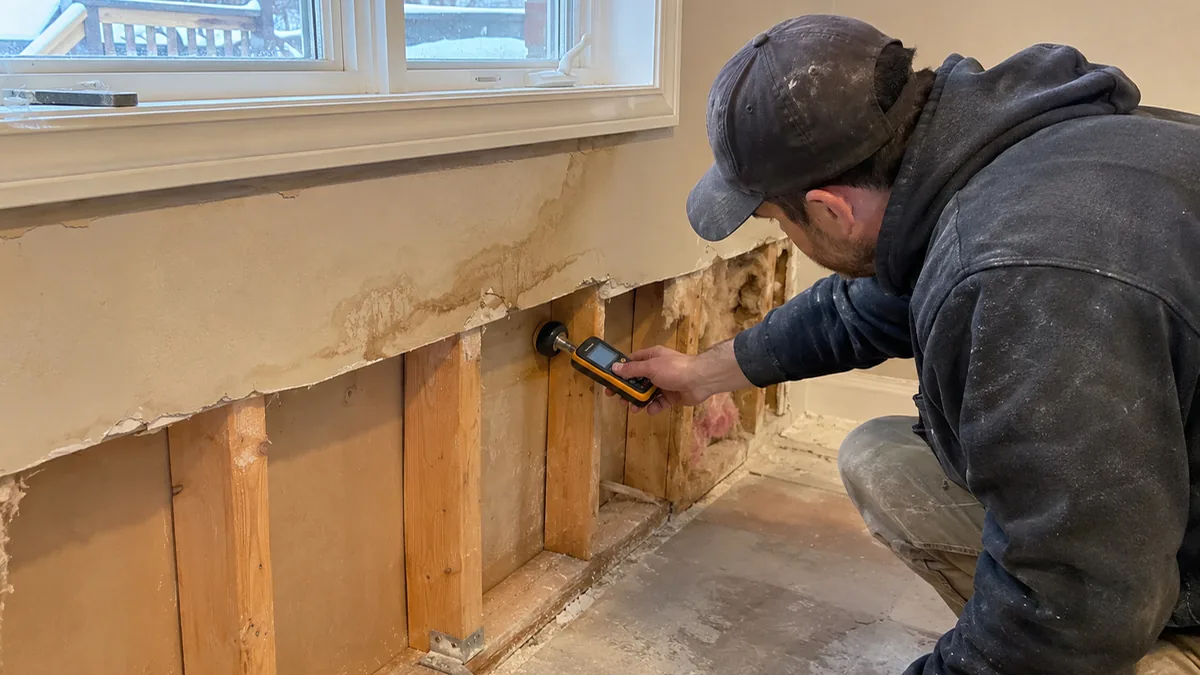
When drywall gets wet, do not start by covering the stain or cutting a hole at random. First make sure the area is safe, stop the source of water, and find out how far moisture has travelled. A small, clean-water splash on an intact surface may dry without replacement. Wet, softened, swollen, contaminated or mould-affected drywall often needs removal, but the decision depends on the source, duration, material condition and what is behind the board.
Drywall is porous and its paper facing can support mould growth when it stays damp. A surface can look dry while insulation, framing or the back of the board remains wet. This guide explains what homeowners can check, when to bring in a restoration professional, what a drywall repair includes, and what to ask an insurer. It is general information, not a substitute for a site assessment or your policy wording.
What to do first
1. Keep people safe
Water and electricity are a dangerous combination. If water is near outlets, wiring, fixtures, appliances or a ceiling light, do not touch the wet area or switch. Keep people away and contact an electrician or emergency service as appropriate. If there is standing water, a sagging ceiling, a ceiling bulge, or signs that the structure may be unsafe, keep clear and get qualified help.
If you can safely identify the leak, shut off the relevant water supply. For a roof leak, plumbing failure, appliance overflow or exterior entry, the source must be stopped before the wall is repaired. If the source is uncertain, contact the trade who can identify it. Drywall work cannot correct a leaking pipe or failed roof flashing.
2. Limit further damage without disturbing suspect materials
Move belongings away from water if safe, take photographs, and place a container to catch a small drip only if doing so does not put you at risk. Do not puncture a ceiling bulge to drain it. Water may be heavy, and the surface could fail unpredictably. Do not scrape, sand or cut older building materials that may contain asbestos. Health Canada lists drywall and joint-related materials among products where asbestos may be found in older homes and recommends professional assessment before renovation when it is suspected.
3. Record what happened
Note when you first saw the water, what may have caused it, which rooms are affected and whether the area has been wet before. Take wide and close-up photos before moving or removing materials, unless immediate safety or damage prevention makes that impractical. If you plan to make an insurance claim, ask your insurer what records and emergency steps they require.
Can wet drywall be dried, or does it need to be replaced?
There is no single rule based only on the number of hours or a moisture meter reading. The decision depends on the water source, how long the material was wet, how much water entered the assembly, whether the board is clean and intact, the presence of insulation, and whether the cavity can be adequately inspected and dried.
Drying may be considered when the water is clean, exposure was limited, the board remains firm and flat, and the assembly can be dried and monitored effectively. Removal is more likely when drywall is:
- Soft, swollen, crumbling or sagging
- Delaminated, bubbled or losing its paper facing
- Saturated through to the back or trapped against wet insulation
- Contaminated by sewage, floodwater or another unsanitary source
- Showing mould growth or a persistent musty odour
- Repeatedly wet because the source has not been repaired
- Part of a cavity that cannot be inspected or dried properly in place
These are warning signs, not a do-it-yourself diagnostic standard. A restoration professional can assess the materials and drying plan. If contamination, extensive damage or concealed mould is suspected, get a qualified assessment before the drywall is closed again.
What a water stain can and cannot tell you
A yellow or brown stain shows that water has reached the surface at some point. It does not tell you whether the leak is active, whether the material behind the paint is dry, or whether the water came from a clean source. A stain can remain after the area has dried, and fresh paint can hide it without solving the cause.
Look for more than colour:
- Is the drywall cool or damp compared with nearby areas?
- Is the surface soft when gently pressed?
- Is paint peeling, bubbling or separating?
- Are joints, fasteners or corners swelling?
- Is there a musty smell?
- Does the spot grow after rain, snowmelt, shower use or appliance operation?
- Is the damage on a ceiling below a bathroom, roof, balcony or plumbing line?
Do not rely on smell or appearance alone to rule out hidden moisture. A leak can travel along framing and appear some distance from its source. A contractor may need to inspect adjacent rooms, the floor above, attic or plumbing access.
If the damaged surface is now showing a recurring crack or popped fastener, see our guide to drywall cracks, nail pops and tape seams for other signs that the original cause may still be active.
Why the moisture source must be fixed before drywall work
Replacing damaged board while water is still entering the assembly repeats the same failure. The new surface can stain, soften or develop mould, and the concealed damage may spread. The repair sequence should usually be:
- Identify and stop the water source.
- Assess the affected area and any concealed materials.
- Remove unsound or contaminated material as directed by the responsible professional.
- Dry and verify the assembly using an appropriate method.
- Repair framing, insulation, services or other affected components.
- Install and finish drywall only when the cavity is ready to close.
- Prime and paint the agreed surface.
The trade responsibilities can differ. A plumber may repair the pipe; a roofer may repair the roof; a restoration contractor may manage drying and removal; a drywall contractor may replace and finish board. Agree on who is responsible for each stage and who confirms the cavity is ready before closure.
When to call a restoration or mould professional
Health Canada’s guide to moisture and mould indoors recommends controlling moisture and removing visible mould. It says mould can grow behind walls and above ceilings, and recommends a qualified professional for larger areas, recurring growth, suspected hidden mould or flooding that has penetrated cavities and cannot dry through ordinary means.
Contact a qualified restoration professional when:
- Water came from sewage, a drain backup or floodwater
- Several rooms or a large area are wet
- Water entered wall, ceiling or floor cavities
- Insulation is wet or concealed surfaces cannot be inspected
- Mould covers a large area or returns after cleaning
- The source is unknown or keeps recurring
- The building has older materials that may contain asbestos
- The household includes people at higher risk from mould exposure
Do not treat a small visible patch as proof that the whole issue is small. Health Canada classifies a single mould patch larger than 3 square metres as a large area requiring professional assessment and cleanup. That is a mould cleanup guideline, not a universal cutoff for all drywall removal or insurance decisions.
Can you clean mould from drywall?
It depends on whether mould is on a washable surface or has grown beneath paint or into porous material. Health Canada says not to use bleach to clean mould and advises against getting drywall too wet. It notes that if mould is underneath the paint, drywall will need to be removed and replaced. Painting over mould does not kill it or prevent it from returning.
For a small, superficial issue, follow current public-health guidance and use appropriate protection. If the growth is extensive, recurring, hidden, linked to flooding or affecting vulnerable occupants, seek professional advice. A drywall contractor is not automatically a mould assessor or remediation specialist. Confirm qualifications and responsibilities before work.
Does homeowners insurance cover wet drywall?
Coverage depends on the cause, policy, endorsements, maintenance history and facts of the loss. Canada’s Financial Consumer Agency explains that policies may cover certain unexpected events, including some water damage from inside the home such as a broken pipe, while flood and sewer backup may not be included in a standard policy. Coverage for outside water may require additional protection.
Do not assume a drywall repair is covered or excluded without speaking with your insurer. The policy may treat sudden accidental escape of water differently from gradual leakage, groundwater, surface flooding or lack of maintenance. Ask the insurer:
- Should I make an emergency call or open a claim?
- What temporary steps are permitted?
- Should I wait for an adjuster before removing damaged material?
- What photos, invoices and reports should I keep?
- Which trades should I contact, and are there preferred vendors?
- What deductible and coverage limits apply?
- Is resulting drywall damage treated differently from the failed pipe, appliance or roof?
Keep receipts, contractor notes, photos and correspondence. Do not delay urgent action that is needed to prevent additional damage or protect safety, but ask the insurer how to document it.
What does drywall water-damage repair involve?
A complete repair may include several separate steps and trades. A typical scope can include:
- Protecting furniture and finished surfaces
- Removing a defined section of damaged drywall
- Inspecting the visible cavity and framing
- Coordinating drying or remediation
- Replacing insulation or repairing framing if included
- Installing new drywall with suitable backing and fasteners
- Taping, applying compound and sanding
- Matching texture as closely as practical
- Priming and repainting the agreed area
- Removing debris and cleaning the work zone
Each item should be listed or clearly excluded. A quote for drywall alone may not include mould remediation, insulation, plumbing, painting the full room or disposal. Ask who confirms the cavity is dry enough to close. Do not accept a vague “patch and paint” scope if the moisture problem remains unresolved.
How to prepare for a drywall repair estimate
Share the location, approximate size, photos, suspected cause, date discovered and any previous water events. Mention whether the area is a ceiling, exterior wall, basement, bathroom or shared wall. Tell the contractor whether an insurer or restoration firm is already involved.
Ask for a written estimate that separates:
| Scope item | What to clarify |
|---|---|
| Removal | How much board is being removed and who disposes of it? |
| Drying and assessment | Who is responsible, and what confirms the cavity is ready? |
| Replacement materials | What board and insulation are included? |
| Finishing | What finish and texture matching are expected? |
| Painting | Is primer included? Is paint limited to the patch or extended to a full wall or ceiling? |
| Other trades | Are plumbing, roofing, electrical, mould or framing services excluded? |
| Hidden conditions | How are extra work and approval handled? |
Ask the contractor not to close the cavity until the agreed inspection and drying steps are complete. If work is part of an insurance claim, coordinate the scope with the adjuster and the trades involved.
Preventing the same damage from returning
Prevention depends on the source. Repair plumbing leaks promptly, maintain roofs and exterior drainage, keep eavestroughs and downspouts functional, and check appliance hoses and connections. In basements, monitor dampness and address water entry rather than covering it with drywall.
Health Canada recommends maintaining indoor relative humidity in a range of 30% to 50%, using ventilation and dehumidification where needed, and fixing moisture sources. That range is general household guidance, not a substitute for diagnosing a specific wall assembly or climate condition. If condensation, dampness or mould keeps returning, identify the cause rather than repeatedly repainting or patching.
After a repair, keep the estimate, photos and any drying or remediation records. If a stain reappears, the surface softens or a musty smell develops, contact the responsible professional promptly.
How Drywallah can help
Drywallah provides drywall repair for damaged walls and ceilings. Share what happened and what has already been done to stop the water. We can discuss the drywall portion of the work, but leaks, mould remediation, asbestos assessment and concealed conditions may require other qualified professionals. If you are comparing repair estimates, our guide to drywall repair costs in Canada explains what a written scope should identify.
A good repair begins before the new board goes up. The source must be addressed, the affected area assessed, and the scope divided clearly among the trades. That is how you avoid closing in a problem and paying to repair the same surface twice.
Frequently asked questions
Does wet drywall always need to be replaced?
No. A limited exposure to clean water may be dryable if the material remains sound and the assembly can be dried and checked. Soft, swollen, contaminated, mouldy or inaccessible wet drywall is more likely to need removal. A professional should assess uncertain or extensive damage.
How long does drywall take to dry?
There is no universal drying time. It depends on the amount of water, materials, temperature, humidity, airflow and access to the cavity. Do not close a wall based only on the surface feeling dry.
Can I paint over a water stain?
Only after the source is fixed and the material is confirmed dry and sound. Paint can hide a stain but will not stop a leak or correct damaged drywall.
Should I call a drywall contractor or a restoration company?
For active water, large areas, contaminated water, wet cavities or mould concerns, contact a restoration professional first. A drywall contractor can repair and finish the surface after the moisture and cavity issues are addressed.
Will insurance pay for drywall replacement?
It depends on your policy and the cause of the water. Contact your insurer promptly, explain the source and ask what documentation and emergency work they require.