
Can Drywall Contain Asbestos? What Canadian Homeowners Should Know
Asbestos may be present in some older drywall-related materials. Learn what to do before a renovation, why appearance is not a test, and where Canadian rules differ.
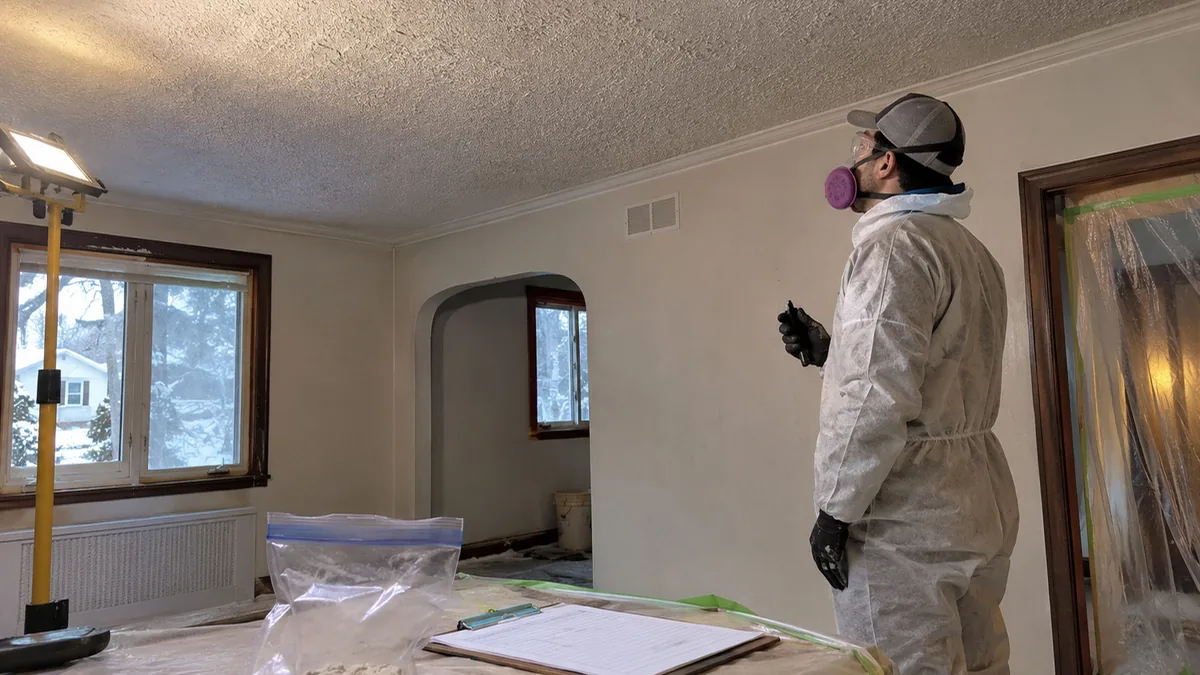
Yes. Some older drywall and drywall-related materials in Canada may contain asbestos, including joint compound, texture, patching products and other coatings. You cannot tell by looking at a wall, and the age of a home alone cannot confirm whether a material contains asbestos. If renovation will disturb a suspect material, stop and arrange professional assessment and testing before cutting, sanding, scraping or removing it.
This is a safety guide, not a test or removal manual. Asbestos exposure can cause serious disease, and safe work requirements differ among provinces and territories. The safest next step is to identify the material and the rules that apply to the project before anyone disturbs it.
Why asbestos can still be present in Canadian homes
Canada prohibited the manufacture, import, sale and use of asbestos and products containing asbestos, subject to limited exceptions, but that does not remove products installed in older buildings. Health Canada says asbestos may still be found in older building materials, including drywall, paint, putty, caulking, sealants and spackling.
Asbestos was used in many building products for properties such as strength and fire resistance. It may be in the drywall joint compound or texture rather than in the paper-faced gypsum panel itself. Other materials in the same room may also need consideration, such as plaster, insulation, flooring, ceiling products, adhesives or pipe coverings.
Do not treat any particular construction year as proof that the material is safe. Product use varied by material, manufacturer, renovation history and location. A newer finish may cover an older layer. The only reliable way to determine whether a specific suspect sample contains asbestos is appropriate professional sampling and laboratory analysis.
Where asbestos may be found around drywall
Potentially relevant materials include:
- Joint compound at seams and fasteners
- Patching compounds used to repair holes
- Textured ceiling or wall coatings
- Plaster or compound beneath later finishes
- Older insulation, fireproofing or pipe coverings near a wall
- Adhesives, flooring or other materials disturbed during the same renovation
This list does not mean every such material contains asbestos. It means that visual inspection alone cannot rule it out. A material that resembles ordinary drywall mud can be asbestos-free or asbestos-containing; appearance is not a dependable test.
When does asbestos pose a risk?
Asbestos-containing material is most concerning when fibres can be released into the air and inhaled. Health Canada identifies renovation and demolition activities such as drilling, sawing, sanding, scraping, removing, disturbing, breaking apart and smoothing rough edges as ways fibres may be released.
Health Canada also explains that materials containing asbestos may present no significant health risk when they are in good condition and left undisturbed, isolated in an attic, sealed behind walls or floorboards, or tightly bound in products. This does not mean every old surface should be sealed or that a homeowner should inspect by cutting into it. If it is damaged or work will disturb it, get qualified advice.
The main point is practical: do not create dust from a material that has not been assessed when asbestos is a possibility. Avoid sanding a textured finish, drilling a hole, removing a light fixture through suspect material, or cutting an inspection opening before you understand the material and the legal work requirements.
What should you do before renovating?
Step 1: Pause the work
Tell everyone involved not to cut, sand, drill, scrape or remove the suspect area until it has been assessed. Keep other trades from disturbing the same surface. If work has already started and dust or debris may have been created, stop and seek professional advice about the site and next steps.
Step 2: Identify the planned disturbance
Write down what work is proposed: a small wall repair, removal of textured ceiling, new wiring, kitchen renovation, full demolition or another project. The amount of material and the way it will be disturbed affect the assessment and regulatory obligations.
Step 3: Arrange an appropriate assessment
Contact a qualified asbestos professional or occupational health and safety consultant familiar with the rules in your province or territory. They can determine what sampling is appropriate, take samples using safe methods, and arrange laboratory analysis. Do not collect a sample yourself unless a qualified professional and local rules specifically direct you to do so.
Step 4: Wait for the results and instructions
If a material tests negative, keep the report with the project records and confirm whether other layers or materials remain untested. If it tests positive, get a written plan from the qualified professional. Do not assume the work can proceed as an ordinary drywall repair.
Step 5: Use qualified workers where required
If asbestos is present, the work may require specific training, containment, protective equipment, notification, waste handling or a licensed/qualified contractor depending on the jurisdiction and task. Confirm the requirements with the relevant regulator and the professional responsible for the work.
Do not rely on a home test kit or a visual guess
A photograph, product label, colour, texture or construction date cannot reliably identify asbestos. A home test kit may not provide the sampling quality, analysis or regulatory documentation needed for a renovation. Improper sampling can release fibres and produce a misleading result if the sample does not represent all material layers.
If a contractor says “that kind never had asbestos,” ask what evidence supports the claim and whether the exact material planned for disturbance has been assessed. A confident guess is not a substitute for a documented result.
What if the material has already been disturbed?
Stop the activity and avoid sweeping, vacuuming with an ordinary household vacuum, or handling debris. Do not brush clothing or carry dusty items through the house. Keep people and pets away from the area and contact a qualified asbestos professional or local occupational health and safety authority for instructions. The correct response depends on the material, amount disturbed, location and work conditions.
If there is visible dust, debris or suspected exposure, do not improvise cleanup advice from an online article. The professional can advise on controlling access, assessment, cleanup and any required notifications. For health concerns about a possible exposure, contact a health professional or public-health authority.
Canadian rules: what is national and what varies?
Canada has federal rules prohibiting the manufacture, import, sale and use of asbestos and products containing asbestos, with defined exceptions. Renovation and construction work is also subject to occupational health and safety and building-related requirements that are administered by the applicable jurisdictions.
The details for asbestos work are not one identical national homeowner rule. Provinces and territories can have different definitions, training requirements, work categories, notification rules, worker protections and disposal procedures. A requirement may also depend on whether the project is residential, commercial, owner-performed or carried out by an employer or contractor.
The National Research Council’s model building code system is also adopted and enforced by provinces and territories. For asbestos work, consult the current occupational health and safety authority in the place where the project is located, as well as the qualified professional managing the assessment. Do not use a guide for one province as proof of requirements in another.
Ontario, for example, has Regulation 278/05 and government guidance for asbestos on construction projects and in buildings. Other jurisdictions publish their own rules. Federal guidance from Health Canada gives broad health and homeowner advice, while workplace and construction requirements must be checked locally.
Asbestos is not only a drywall issue
A renovation may disturb several materials in the same area. A wall opening can involve drywall compound, insulation, flooring, ceiling texture, pipe insulation, electrical components, adhesive or fireproofing. Testing one visible layer does not automatically clear every other material. If water damage is part of the renovation, read our guide to drywall water damage and repair, then confirm suspect materials are assessed before the wall is opened.
Before demolition, tell the assessor the full scope. They may need to identify which materials will be disturbed and whether more than one sample is needed. Keep the report with plans and contractor documents so later trades know what was tested and what was not.
If the building has changed over time, note the dates of known renovations and keep old invoices or inspection reports. This history can help a qualified professional plan assessment, but it does not replace testing where required.
What homeowners should ask an asbestos professional
- What materials and layers are included in this assessment?
- Who will collect samples and how will the area be protected?
- Is the laboratory analysis performed by a qualified laboratory?
- What does the report say was tested and what remains untested?
- What work methods are permitted if asbestos is found?
- Are permits, notices, training or special disposal required here?
- Who will handle the work and who is responsible for clearance?
- What records should I keep for future renovations or resale?
Ask for a written report, not only a phone call saying “it looks fine.” The report should identify sample locations and materials, the analytical result, limitations, and any recommendations or scope restrictions.
Keep the report even after the current renovation is complete. It can help you plan later work, explain which surfaces were assessed, and prevent a future contractor from assuming that an untested area has been cleared. Store it with renovation permits, drawings, product records and invoices. If you sell the home or hire another trade, share the relevant information accurately and avoid implying that the entire property is asbestos-free unless a qualified professional has assessed that full scope.
How asbestos affects a drywall repair estimate
An ordinary drywall quote does not automatically include asbestos assessment, abatement, specialized containment, waste transport or clearance. If suspect materials are present, tell contractors before asking them to cut or remove the wall. They can explain whether the job is within their qualifications or whether a separate asbestos professional must complete that stage first.
A responsible drywall scope should state what surfaces are being repaired and what assumptions apply. If the assessment is pending, do not expect a final demolition price based on a photograph. The work plan can change significantly if the material is positive or if more layers are found.
Drywallah can discuss drywall installation and repair, but we do not treat an online description as an asbestos test. Suspect materials must be assessed and handled through the appropriate qualified professionals before ordinary drywall work proceeds. For projects where the wall will be rebuilt, our Canadian drywall installation cost guide explains how to scope the later drywall stage.
Frequently asked questions
Can modern drywall contain asbestos?
Products containing asbestos are prohibited in Canada, subject to limited exceptions, but older installed materials remain in buildings. Do not assume a wall is safe based only on appearance or an approximate construction date.
Can drywall joint compound contain asbestos?
Some older drywall-related products, including joint compounds and patching materials, may contain asbestos. A qualified professional must assess the specific material.
Can I remove a small amount myself?
Do not rely on a general internet rule about a “small amount.” Applicable rules and safe-work requirements vary by jurisdiction and project. Have the material assessed and follow the advice of qualified professionals and the local regulator.
Is asbestos dangerous if it is behind drywall?
Health Canada says materials that are in good condition and sealed behind walls may pose no significant health risk while undisturbed. Renovation, damage or deterioration can change the situation. Do not open the assembly to check without a plan.
Does a negative sample mean the whole room is asbestos-free?
Not necessarily. It applies to the material and sample represented in the report. Other layers, locations or products may not have been tested. Read the report and ask the assessor about its limits.
Sources and further reading
- Health Canada: Asbestos and your health
- Canadian Centre for Occupational Health and Safety: Asbestos in the home
- Ontario Regulation 278/05: Designated Substance, Asbestos on Construction Projects and in Buildings and Repair Operations
- Ontario: A guide to the regulation respecting asbestos on construction projects and in buildings