
Why Drywall Cracks, Nail Pops, and Tape Seams Keep Coming Back
Learn what recurring drywall cracks, nail pops and lifted tape can mean, what to check before patching, and when a surface repair is not enough.
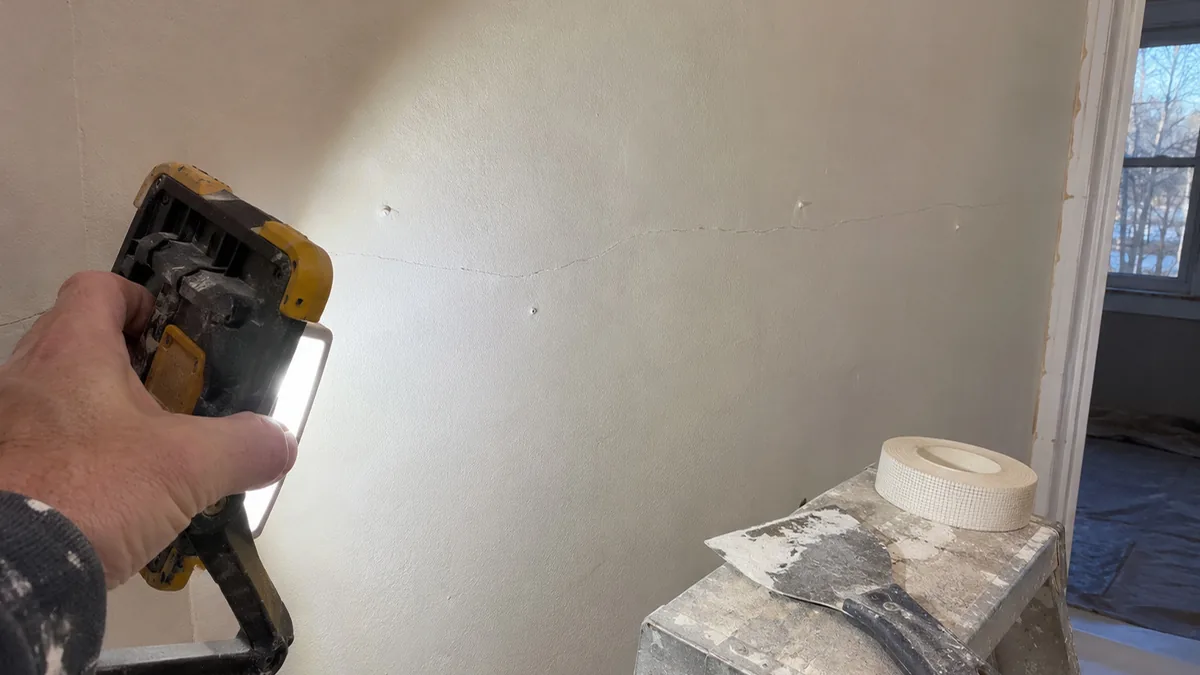
Drywall cracks, nail pops and loose tape are visible symptoms, not always the underlying problem. A small, stable mark may need a straightforward repair. A crack that keeps reopening, a damp patch, a widening gap or several new defects may point to movement, moisture or a problem with the framing or original installation. The repair lasts longer when you understand what moved before you cover it.
This guide explains common causes, what homeowners can safely observe, how repair scopes differ, and when to bring in a qualified professional. It cannot diagnose a building from a photograph, and it is not structural advice. If you see a sudden change, sagging, water entry or a large widening crack, get the condition assessed before treating it as cosmetic.
What the different defects can look like
Hairline cracks
Fine cracks can appear along joints, at corners, around doors and windows, or where dissimilar materials meet. Some are related to normal seasonal movement or shrinkage. Others may be linked to a failed tape joint, impact, moisture or movement in framing. The pattern and change over time matter more than the label “hairline.”
Nail or screw pops
A nail pop is a small raised circle or dimple where a fastener has moved, loosened or become visible through compound and paint. Screw pops can occur when a screw was overdriven, missed the framing, or the board or framing later moved. A patch of compound over the raised point may conceal it temporarily but will not secure the board.
Lifted or cracked tape
Tape can bubble, lift or crack when it was not fully embedded, the joint moved, the compound did not bond well, the board edges were not supported, or moisture affected the joint. If tape is separating along a long seam, filling the visible opening without removing loose material may not hold.
Corner cracks
Cracks can form at inside or outside corners. Outside corners may have metal or other corner bead beneath the finish. If the bead is loose or damaged, the repair must address it. Inside corners rely on tape and compound; movement at the joint can reopen a cosmetic fill.
Common causes, and how clues help narrow them down
| What you notice | Possible cause to investigate |
|---|---|
| One small fastener mark | Fastener movement, missed framing or a shallow/overdriven fastener |
| Crack following a board seam | Tape failure, unsupported edge, installation issue or movement |
| Crack at the top corner of a door or window | Stress concentration, framing movement or opening/header movement |
| Several new cracks after a leak | Moisture damage or movement as materials swell and dry |
| Seasonal hairline crack that opens and closes | Seasonal movement or changes in humidity |
| Cracks plus sticking doors or uneven floors | Possible broader movement that needs qualified assessment |
| Ceiling seam and sagging or bulging | Moisture, fastener failure or a potentially unsafe ceiling condition |
| Repeated patch failure in one location | The cause may remain active or the repair may not address the joint or substrate |
These clues are not proof. A door that sticks can have many causes, and one crack does not establish a structural problem. Use the pattern to decide whether to seek further assessment, not to make a diagnosis.
How to inspect the problem without making it worse
You can observe and document a defect without opening the wall:
- Photograph it with a ruler or coin for scale.
- Record the date and mark the ends lightly with pencil if appropriate.
- Note whether the crack is on a joint, corner, ceiling, door opening or exterior wall.
- Check for stains, peeling paint, soft drywall, condensation or musty odour.
- Notice whether a door or window nearby has changed operation.
- Compare the mark after several weeks and after major seasonal changes.
- Record any leak, impact, renovation or work that happened before it appeared.
Do not push hard on a ceiling bulge or cut into a wall to see what is behind it. A sagging ceiling can be heavy, and concealed cavities can contain wiring, plumbing, insulation or materials that require assessment.
When a crack needs prompt attention
Get qualified advice promptly if you see:
- A ceiling that is sagging, bulging or separating
- A crack that widens quickly or continues to grow
- Water stains, active leaking or a soft, swollen surface
- Several cracks appearing suddenly after a major event
- A crack accompanied by doors or windows that suddenly bind
- Cracking in masonry or other structural material as well as drywall
- A large gap, displaced surface or loose board
- Suspect older material that would be disturbed by repair
For immediate danger, keep people away and contact the appropriate emergency or building professional. For a potential structural concern, consult a qualified engineer or building professional rather than relying on a drywall patcher to diagnose the structure.
How a durable repair differs from a quick cover-up
A successful repair begins with a sound surface and a stable cause. The method depends on the defect.
Fastener pop
The contractor may remove loose compound, check whether the board is secure, add or reset fasteners where appropriate, and refinish the area. If the framing or board is moving, that issue needs attention. Simply covering the pop can leave a bump or allow it to return.
Failed tape joint
Loose or cracked tape is generally removed back to a sound area. The joint may need additional fastening or edge support, then new tape and compound applied in suitable coats. The work needs enough width to feather the joint so it blends with the surrounding plane.
Corner damage
If the corner bead is loose or bent, it may need to be resecured or replaced before compound is applied. A fill over a loose bead may crack again.
Movement-related crack
Before repairing, determine whether movement is continuing and whether the crack is in a finish joint or related to another part of the building. An elastic sealant or cosmetic filler is not automatically appropriate for drywall. The repair product and method should match the joint, substrate and intended finish.
Moisture-related damage
Stop the water source and assess the material before closing or repainting it. Soft or mould-affected drywall may need removal. Health Canada advises addressing moisture and not simply painting over mould. See its moisture and mould guide.
Why repairs can still be visible
Even a well-finished repair may show under certain conditions. Old paint can fade or yellow, texture can vary, and light can fall across the repair at a shallow angle. A small patch may need primer and repainting across a larger wall or ceiling to create a uniform appearance.
Texture matching is particularly difficult if the original finish was applied with a tool or method that is no longer known. The contractor can aim for a close match, but should not promise invisibility before seeing the surface and lighting.
If the wall has critical side lighting, strong gloss paint or a large smooth surface, discuss the finish level before repair. The Gypsum Association’s GA-214 recommendations describe levels of finish, including Level 5 with a skim coat across the surface. That may help in some conditions, but it does not correct a moving frame or uneven wall. Our guide to Level 4 versus Level 5 drywall finish explains the difference and what to put in a scope.
DIY repair: what is reasonable?
A small, dry, stable nail hole or shallow dent can be a suitable DIY repair if you are comfortable preparing and sanding the surface. The work usually involves cleaning loose material, filling in thin layers, allowing drying time, sanding carefully and priming before paint.
A recurring crack, a long lifted tape seam, a corner with loose bead, a ceiling issue, a wet surface or suspected structural movement is different. You need to understand why the defect appeared before choosing a filler or tape. The wrong quick fix can make the repair more visible and leave the cause untouched.
Use dust control when sanding and follow product instructions. Do not sand suspect old coatings, compound or texture until asbestos has been considered. Health Canada advises avoiding disturbance of materials that may contain asbestos and having suspect materials assessed before renovation.
What does a contractor need to know?
When requesting a quote, share:
- The defect’s location and approximate length or size
- Whether it has changed over time
- Any history of leaks, humidity or previous repairs
- Whether the board feels soft, loose or swollen
- Nearby door, window or floor changes
- Your desired finish and paint plan
- Photos that show the whole wall and the close-up
Ask the contractor to identify what is included: removal of loose tape, added fasteners, board replacement, corner bead, compound coats, sanding, texture matching, primer, paint and cleanup. A quote that only says “fix crack” may not include diagnosis or the steps needed to prevent a repeat.
How to tell if a repair is holding
After the repair is complete, watch the area through normal use and seasonal changes. A stable finish should not quickly develop the same crack or pop. Keep an eye on the cause as well: plumbing, roof or exterior moisture must stay resolved.
If the mark returns, take a new photo and compare it with the original. Note how long it took, whether it grew, and whether there are other changes nearby. Contact the contractor if the work is under warranty, and ask whether the recurrence points to an active cause or a finish issue. Avoid layering more compound over a recurring defect without reassessment.
A note about new homes and renovations
Drywall joints may show small changes as a building dries and materials move. Not every small crack is evidence of a defect, but timing and pattern matter. If cracking appears soon after construction, tell the builder or contractor and document it before repainting. Warranty processes vary, so follow the contract and applicable provincial or territorial consumer-protection rules.
When planning a renovation, coordinate drywall installation after framing, plumbing, electrical and required inspections are complete. Confirm that board edges are supported and that the chosen assembly suits the wall or ceiling. A sound installation reduces the chance of future joint movement, though no finish can eliminate every movement in a building.
How Drywallah can help
Drywallah handles drywall repairs, including cracks, holes and damaged surfaces. For an initial assessment, send clear photos and explain when the issue started, whether it is changing, and whether water or previous repairs are involved. If the concern appears structural, involves active moisture, or may include asbestos, the right first step may be another qualified professional. For more on preparing a repair request and comparing scope, read how drywall repair estimates work in Canada.
The aim is to repair the surface in a way that suits the cause and finish. A quick fill may be enough for a stable cosmetic mark. A recurring defect deserves a closer look before the next coat of paint hides it again.
Frequently asked questions
Are drywall cracks normal?
Some small cracks can occur with seasonal movement or normal building changes. A crack that widens, returns repeatedly, appears with moisture or is accompanied by other changes should be assessed.
Why do nail pops keep coming back?
The fastener or board may still be moving, the fastener may not be secure in framing, or the original repair may only have covered the surface. The board should be secured before the finish is rebuilt.
Can I put new tape over cracked tape?
Not as a reliable fix if the old tape is loose or the joint is moving. Loose material generally needs to be removed and the cause addressed before the joint is retaped.
Should I worry about a crack over a door?
Not every crack above a door is structural. If it is growing, wide, accompanied by a door that suddenly binds, or appears with other movement, get a qualified assessment.
Will the repair be invisible?
That depends on texture, paint, lighting and the surrounding surface. A contractor can aim for a close blend, but repainting a larger area may be needed and exact matching cannot always be promised.