
Level 4 vs. Level 5 Drywall Finish: What Is the Difference?
Understand drywall finish levels, when Level 5 may be useful, how paint and lighting change what you see, and what to specify in a Canadian renovation quote.
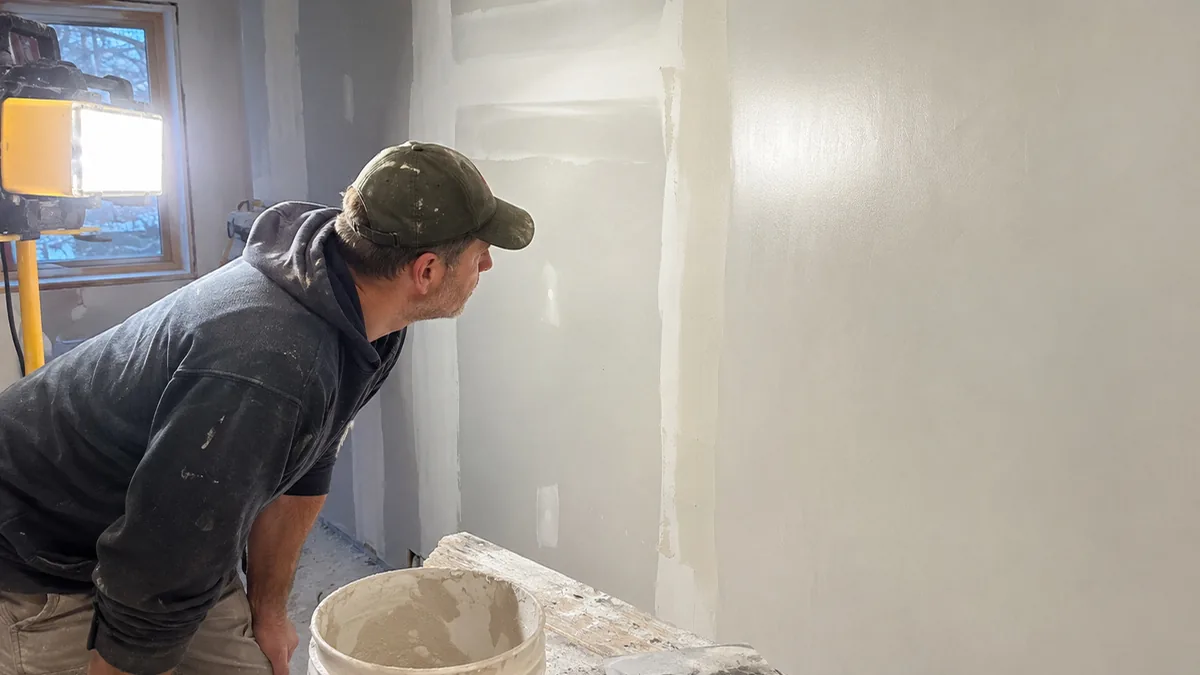
Level 4 and Level 5 are not paint grades. They describe how gypsum board surfaces are prepared before decoration. In general, Level 4 is a common finish for many residential walls with suitable paint and ordinary lighting. Level 5 adds a thin skim coat over the entire surface and is often considered where critical lighting, a higher sheen or a demanding appearance makes joint differences more visible.
Neither level guarantees a perfectly flat wall. Framing, board installation, joint placement, lighting, paint and workmanship all affect the final appearance. The right choice depends on the room and finish, so specify the expected surface and conditions rather than asking only for “a smooth wall.”
What does a drywall finish level mean?
Gypsum board is installed in panels. The tapered edges and ends create joints; fasteners and corners also need finishing. Joint compound and tape hide those transitions and prepare the board for paint, texture, wallpaper or another covering.
The Gypsum Association’s GA-214 recommendations describe levels of finish from Level 0 through Level 5. They give contractors and designers a shared way to state the amount of preparation expected before final decoration. They are not a scale of contractor skill, and the number does not specify the final paint or guarantee that every surface looks identical under every light.
The finish recommendation should match the intended decoration and how the surface will be lit. For example, a textured finish may not call for the same preparation as a smooth wall painted with a glossy coating and illuminated from the side.
Level 4: the common residential finish
Level 4 includes tape embedded in compound at joints and interior angles, with additional coats over joints, angles and fasteners as described in GA-214. The surface is prepared for many typical wall coverings and paint applications. It is often used in homes where walls receive a flat or low-sheen paint and the lighting is not unusually critical.
Level 4 does not mean that the whole wall has been skimmed with compound. The board face remains largely as manufactured, while joints and fastener areas receive finish coats. Under normal viewing conditions, these areas should be prepared to blend with the board surface. But a difference can show when the light hits the wall sharply or the paint reflects more light.
That is why a wall can look acceptable in daylight from one direction and show joint bands at night under a wall washer or bright ceiling fixture. It does not necessarily mean the work was done incorrectly; it may mean the finish level, lighting and decoration were not coordinated.
Level 5: added treatment across the board face
Level 5 includes the Level 4 joint and fastener treatment, plus a thin skim coat of joint compound over the entire surface. This reduces differences in texture and porosity between the paper face and finished joints. It is the highest recommended finish level in GA-214.
Level 5 is commonly considered for:
- Walls or ceilings exposed to strong side light or wall-washing fixtures
- Surfaces receiving gloss or semi-gloss paint
- Smooth finishes where small surface differences would be more noticeable
- Large, uninterrupted walls where joint visibility is a concern
- Projects with higher visual expectations agreed in advance
It is not an automatic solution for poor framing, bowed studs, badly aligned board, ridges, or an uneven substrate. A skim coat can help create a more uniform surface, but it cannot correct all geometry problems. The underlying work still needs to be sound.
Level 4 compared with Level 5
| Question | Level 4 | Level 5 |
|---|---|---|
| What is finished? | Joints, corners and fastener areas receive multiple coats and preparation. | Level 4 treatment plus a skim coat over the entire surface. |
| Typical use | Many standard residential walls with appropriate decoration and lighting. | Critical lighting, higher sheen, smooth or high-visibility surfaces. |
| Does it cover the whole board face? | No, not as a continuous skim coat. | Yes, with a thin surface coat. |
| Does it guarantee a perfect wall? | No. | No. It does not correct framing or installation defects. |
| Does it eliminate paint differences? | No. | It can reduce differences in surface texture and porosity, but primer and paint still matter. |
| Is one always better? | No. It may be the right and economical choice for the room. | No. It adds work and should be specified where the conditions justify it. |
The useful question is not “Which level is best?” It is “What finish will give this room the appearance I want under its actual lighting and decoration?” If you are comparing a full installation quote, our drywall installation cost guide for Canada explains how finish scope affects the estimate.
Lighting: why walls reveal flaws
Light that falls across a wall at a shallow angle is often called raking or critical light. It casts small shadows around ridges, joints, fasteners and surface variation. Large windows, skylights, recessed fixtures and wall washers can make these marks more visible.
Walk through the room at different times of day. Note where sunlight travels and where fixtures will be placed. If the room is not built yet, review the lighting plan with the designer or electrician before the drywall finish is chosen. A contractor cannot assess future lighting from a room that is still open.
Paint also changes what you see. Glossier coatings reflect more light and can emphasize surface irregularities. Flat paints tend to diffuse light more, though they do not hide every defect. Colour, application, primer and the quality of the substrate all play a part.
For a critical wall, tell the contractor:
- The paint sheen you plan to use
- Whether the wall will receive a wall washer or strong side light
- Whether the surface will be smooth, textured or covered with wallpaper
- Which areas are most visible from normal standing positions
- Whether the expectation is a standard residential finish or a higher visual standard
What Level 5 can and cannot do
A Level 5 finish adds material and labour because the whole surface receives another coat, which then needs to dry and be prepared. It can create a more uniform base under demanding light or paint. It is not a magic coating that makes every wall flawless.
It cannot correct:
- Studs or joists that are out of plane
- Board edges that were poorly supported
- Fasteners that were overdriven or missed framing
- Movement in framing or the building
- Moisture damage or an active leak
- A paint application problem
- A wall that was never designed to be perfectly flat
If a wall is wavy, discuss framing correction or board installation before finishing. Adding compound to fill deep depressions may create a surface that is still visibly uneven and can crack or require extensive work.
Level 5 versus skim coating an existing wall
People sometimes use “Level 5” and “skim coat” as though they mean the same thing. A Level 5 finish is a defined finish level for new gypsum board work. “Skim coat” can describe applying a thin compound layer over an existing wall to improve its surface, but the scope can vary.
An old painted wall may have texture, multiple paint layers, repairs, wallpaper residue or other problems. Before applying compound, the surface may need cleaning, scraping, sanding, priming or repair. The existing paint must be sound and suitable for the proposed treatment. In some cases, removing old material or installing new board is a better route.
Ask what the contractor means by skim coating:
- Does it cover the entire wall or only selected areas?
- What preparation is included?
- Will old texture or wallpaper be removed?
- Is a bonding primer required?
- How will cracks and loose paint be handled?
- Is sanding and dust cleanup included?
- What is the expected surface ready for: primer, paint or another covering?
What about Levels 0 through 3?
Levels 0 through 3 are used for specific conditions and decorations. They generally involve less finishing than Levels 4 and 5. The appropriate level depends on the project, such as temporary construction, areas receiving tile or paneling, or surfaces receiving heavier textures. Do not select a lower level by number alone; consider the full assembly and finish system.
For tile, follow the tile and waterproofing manufacturer’s substrate requirements. Standard drywall should not be assumed suitable in every wet area. A moisture-resistant panel is not automatically waterproof. The wall assembly needs the correct substrate, waterproofing and detailing for the installation.
How to put finish expectations into a quote
The phrase “Level 4” or “Level 5” is a helpful start, but an estimate should also identify the areas and conditions covered. A clear specification might name:
- The rooms and surfaces included
- The finish level for each area
- The decoration planned, including paint sheen or texture
- Known critical-lighting conditions
- Any framing or substrate correction included or excluded
- Whether primer and paint are part of the work
- The expected inspection conditions
- How changes or repairs after lighting installation will be handled
Do not ask a contractor to guarantee that a wall will be invisible under every possible light angle. Instead, agree on a realistic standard and inspect the prepared surface under the lighting conditions that matter before final paint.
A practical inspection method
Before painting, walk the room with the contractor. Use the room’s installed or temporary lighting and view the walls from normal positions. Identify visible ridges, holes, scratches, missed areas or other concerns. A bright handheld light held directly against a wall can reveal tiny marks that would not be visible in ordinary use, so it should not be treated as the only acceptance test unless the project specification says so.
If a concern appears, point to the location and discuss whether it is a finishing defect, framing issue, lighting effect or expected variation. Agree on the next step before applying the final decoration, because correcting a surface after paint can require more preparation.
Choosing the finish for common rooms
Bedrooms and living rooms
Many bedrooms and living rooms use Level 4 with flat or low-sheen paint and ordinary lighting. A large feature wall, high-gloss coating or wall washer may justify discussing Level 5 or another preparation strategy.
Hallways and stairwells
Long corridors and tall stair walls often receive light from one end or from windows along a side. Shadows can emphasize uneven areas. Discuss lighting and access early, since stairwells can also make finishing and inspection more difficult.
Ceilings
Ceilings can show joint lines under daylight, pot lights and linear fixtures. The board layout, framing, finish and paint all matter. Talk through the lighting plan and desired appearance before the boards are installed.
Kitchens and bathrooms
The expected surface finish is only one part of these rooms. Moisture exposure, ventilation, tile, waterproofing and product compatibility must be addressed first. Choose materials and assemblies for the location, not simply the finish number.
Garages and utility rooms
The finish level may be less important than the required fire or durability performance. If the wall or ceiling is part of a required separation, confirm the entire assembly with the applicable code and qualified professional. “Level 5” does not mean “fire rated.”
Cost: how the levels affect a quote
Level 5 generally requires more work than Level 4 because it adds a continuous coat and preparation across the surface. The price difference depends on area, access, board condition, drying conditions, local labour and whether the project is new construction or a renovation. A contractor should quote the actual surfaces rather than apply a national add-on amount.
Request two clearly scoped options if you are unsure:
- The recommended finish for the room and planned decoration.
- An upgraded finish for the most critical surfaces, such as a wall under side light.
This lets you decide where the additional work makes sense. A whole-house Level 5 specification may be unnecessary, while one prominent wall may warrant the upgrade.
Questions to ask your drywall contractor
- What finish level are you including?
- Which GA-214 recommendation or project specification are you following?
- What does “smooth” mean in this estimate?
- Have you considered the room’s windows and fixture locations?
- Does the quote include primer, paint or only drywall finishing?
- Are framing corrections included if the wall is out of plane?
- How will you inspect the wall before painting?
- Are there surfaces that need a different finish or substrate?
Drywallah provides taping and finishing as part of drywall projects. Share the paint plan, lighting and areas where appearance matters most so the finish can be discussed before work begins. If a seam or corner is already failing, see why drywall cracks and tape seams return before deciding that a higher finish level alone will solve it.
Frequently asked questions
Is Level 5 always better than Level 4?
No. Level 5 adds a skim coat across the surface and can be useful under critical lighting or higher-sheen paint. Level 4 is suitable for many standard residential situations. The room and decoration should guide the choice.
Does Level 5 mean the wall will be perfectly smooth?
It means the surface receives a higher level of preparation, including a skim coat. It does not guarantee perfect flatness or correct framing and installation problems.
Can I use Level 4 with semi-gloss paint?
It may be possible, but higher-sheen paint can reveal more surface variation. Discuss the coating and lighting with the contractor and paint professional before specifying the finish.
Does a Level 5 finish include painting?
No. Finish level describes drywall preparation. Primer and paint need to be listed separately if included.
Is Level 5 required by Canadian building code?
It is a recommended finish level, not a universal code requirement for every room. Applicable code requirements and project specifications depend on the jurisdiction and assembly.