
Plaster vs. Drywall in Canadian Homes: Repair, Keep or Replace?
Compare plaster and drywall, identify the condition of an older wall, and weigh repair, overlay and replacement without assuming every old wall needs demolition.
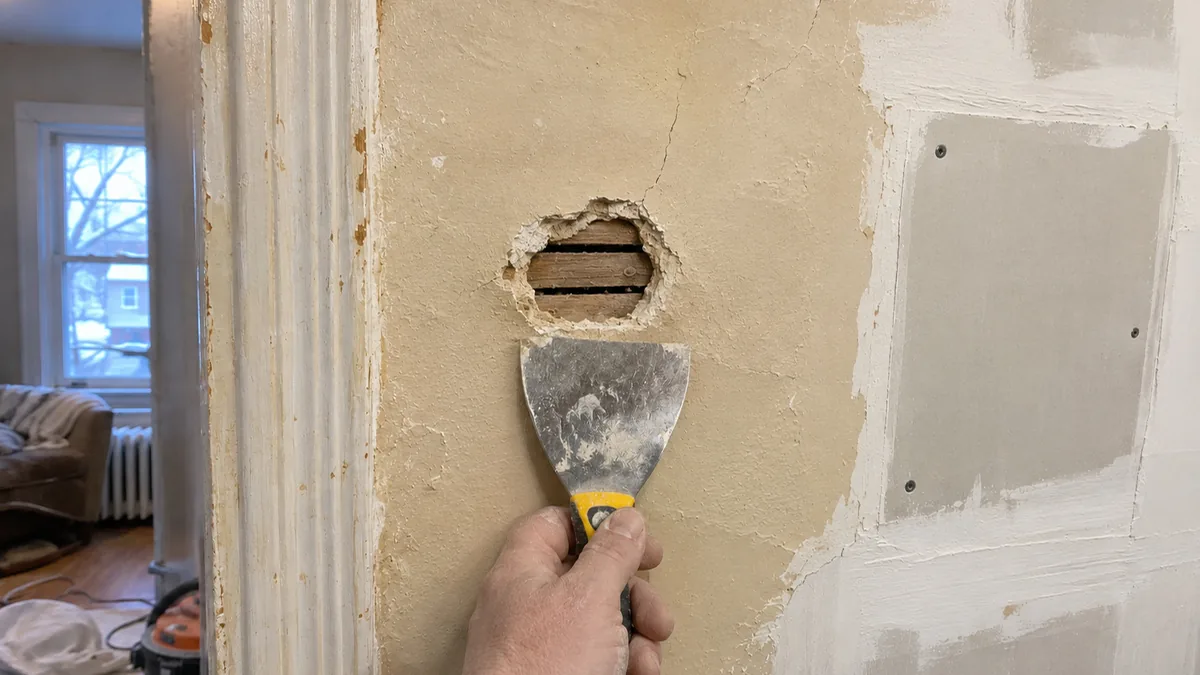
Plaster and drywall can both make durable interior walls, but they are built and repaired differently. If an older wall is sound, keeping and repairing it may preserve original details and avoid unnecessary demolition. If plaster is loose, extensively damaged or must be opened for a renovation, replacement with drywall may make sense. The decision depends on attachment, moisture, the size of the failure, the home’s character, and what other work is planned.
This guide is for Canadian homeowners comparing options. It does not diagnose a wall, assess heritage value, or replace advice from a qualified building or conservation professional.
How are plaster and drywall different?
Traditional plaster walls may consist of plaster applied over wood or metal lath, while later systems can use plaster over gypsum lath or other substrates. The composition and number of coats vary with age and construction. A plaster wall may be thicker, heavier and more irregular than a modern drywall partition.
Drywall, also called gypsum board, is manufactured in panels fastened to framing. Joints, fasteners, corners and transitions are taped and finished with compound. Panel thickness, backing, framing, board type and finishing depend on the application. See our guide to drywall board types for common panel categories and their limits.
Neither material is automatically superior. Sound plaster can be worth preserving, particularly where it contributes to an older home’s proportions, trim, mouldings or decorative work. Drywall is often easier to install and modify during renovation, but replacing sound plaster can add cost, dust, disposal and new finishing work.
First identify what is failing
Look for patterns rather than relying on one symptom:
- Fine stable cracks: May be related to age, movement, a joint or earlier repair. Monitor whether they change.
- A hollow sound: May indicate loss of bond, but tapping is only a clue and cannot establish whether an entire area is unsafe.
- Bulging, movement or falling pieces: Treat as a safety concern. Keep clear and arrange qualified assessment.
- Staining, soft material or musty odour: Investigate moisture before patching or painting.
- Cracks around openings: These may relate to movement, framing or an old repair; a photo cannot establish the cause.
- Loose decorative trim or ceiling plaster: Avoid pulling or pressing it. Falling material can cause injury.
Moisture needs attention before either plaster or drywall repairs. Health Canada advises fixing the source of water and addressing mould rather than simply painting over affected material. If the area is large or keeps returning, seek professional help.
Older walls may also include materials that require safe handling. Before cutting, sanding, scraping or removing suspect older materials, review Health Canada’s asbestos guidance and arrange professional assessment where needed.
Repair, skim, overlay or replace?
| Option | Often considered when | Trade-offs |
|---|---|---|
| Repair existing plaster | Damage is limited and surrounding plaster remains secure | Requires compatible repair and texture work; a surface patch will not fix loose underlying plaster |
| Skim or resurface | The wall is stable but has widespread shallow defects or an uneven finish | Adds preparation and drying; may affect trim or reveal movement if the underlying surface is unsound |
| Overlay with drywall | Existing wall is sufficiently stable and demolition is undesirable | Increases wall thickness and affects trim, outlets, window returns and room dimensions |
| Remove and replace | Plaster is extensively detached or damaged, or walls must be opened for other work | Demolition, disposal, dust control, possible hidden repairs and new finishing are involved |
These are project options, not universal prescriptions. A contractor should explain why a method fits the wall and how it meets adjacent finishes.
When is keeping plaster the better choice?
Keeping plaster may be sensible when it is firmly attached, damage is limited, moisture is controlled and the wall’s shape or trim matters. Older homes may have curved corners, deep window returns, decorative plaster, or mouldings that are difficult to reproduce. Preserving sound material can also avoid opening wall cavities that do not need work.
For heritage properties, check whether the building has a designation, conservation easement, or local requirements before making changes. The Parks Canada Standards and Guidelines for the Conservation of Historic Places in Canada recommend evaluating condition and using the gentlest appropriate intervention for character-defining elements. This is conservation guidance, not a statement that every interior repair requires a permit; local rules and property status matter.
Do not assume a crack means the entire wall must come down. Conversely, do not keep a loose ceiling or moisture-damaged wall simply because it is old. Safety, attachment and the source of damage come first.
When can drywall replacement make sense?
Replacement may be practical when large areas are detached, damaged by water, contaminated, or already being opened for plumbing, electrical, insulation or layout changes. Opening the wall can provide access to framing and services, but it also creates responsibilities: the cause of damage must be corrected, any required inspection completed, and the new assembly selected for its use.
Demolition can reveal additional work. The framing may need repair, insulation may be missing or wet, and electrical or plumbing may need attention by the responsible trades. A realistic estimate distinguishes the drywall scope from these other tasks.
Drywall replacement can also change room details. Baseboards, casings, crown, switches, outlets and window trim may need removal or adjustment. New board must meet adjacent surfaces cleanly; a thickness mismatch can leave a visible ridge. The quote should state whether finish carpentry, electrical work, painting and disposal are included.
What about drywall over plaster?
An overlay can reduce demolition, but it is not a shortcut for an unstable surface. The existing wall must be assessed for attachment and moisture. The proposed board must be fastened to suitable framing or an approved substrate using a method appropriate to the system. Do not assume old plaster alone is adequate backing.
The new surface adds thickness. That can affect door and window casing depth, baseboards, crown moulding, electrical box placement, clearances and transitions. A wall may project beyond adjacent rooms or cabinets. If the old wall is uneven, the overlay may follow or exaggerate that unevenness unless the support plane is addressed.
Ask the contractor to explain where fasteners will land, how edges will terminate, and how trim and electrical boxes will be handled. For a finished result, include taping and finishing to the agreed level; our Level 4 and Level 5 finish guide describes what those terms mean.
Comparing cost and disruption
There is no dependable national price for converting plaster to drywall. A small plaster repair, skim coat, overlay and full tear-out are different scopes. Cost depends on wall area, number of rooms, access, hidden conditions, trim, disposal, protection, finish level and painting. Use the drywall installation cost guide as a regional-price-context example, not as a quote for plaster removal.
Ask for options where appropriate:
- Limited repair and repainting.
- Resurfacing the stable wall.
- Overlay, with trim and electrical adjustments listed.
- Full removal and replacement, with disposal and likely exclusions identified.
Compare disruption as well as the total. Full demolition may create more dust and require moving belongings, while a targeted repair can involve repeated visits and may not make an entire old wall perfectly flat. Make sure the quote states what final appearance is included and whether matching existing texture or paint is realistic.
Questions to ask before deciding
- Is the plaster attached and dry, or is it moving or deteriorating?
- What evidence suggests moisture or another underlying cause?
- Can a limited repair preserve the sound material?
- If overlaying, how will framing attachment, wall thickness, trim and outlets be handled?
- If removing, what protection, dust control and disposal are included?
- Are there heritage or building requirements for this property?
- What finish level, primer, paint and cleanup are included?
- Which work must be completed by other trades before the wall is closed?
Bottom line
Choose the least disruptive option that safely addresses the actual condition. Keep sound plaster when preservation and repair make sense. Use drywall where replacement or renovation scope justifies it, and plan for transitions, services and finish work. Get the wall assessed before treating movement, dampness or loose ceiling material as a cosmetic problem.
For drywall repair or new drywall installation, describe the wall’s age if known, the visible damage, any moisture history, and whether you want to preserve existing trim or finishes.