
Popcorn Ceiling Removal in Canada: Safety, Process and Planning
What Canadian homeowners should check before removing a textured ceiling, how the work is planned, and what finishing and quote details matter.
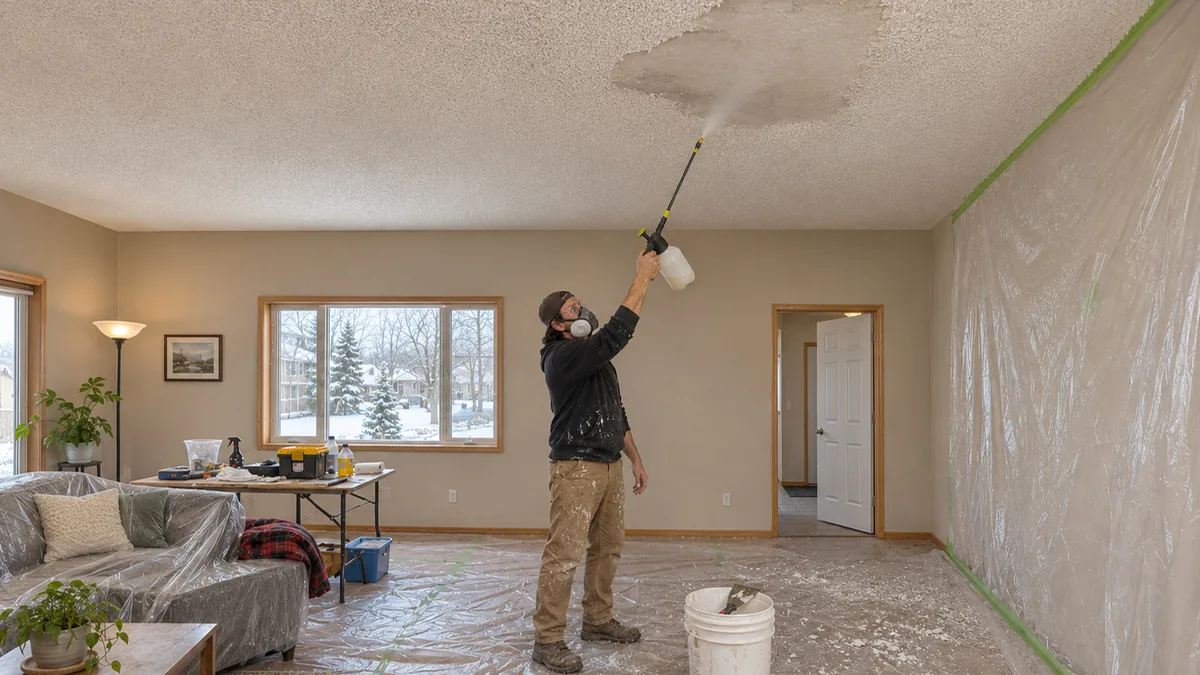
Popcorn ceiling removal starts with identifying the material, not scraping it. Older ceiling texture and related compounds may contain asbestos, and disturbing them can release fibres. If the ceiling’s age or composition is uncertain, do not sand, scrape, drill or wet it to test it yourself. Arrange appropriate assessment before planning removal. Once safety is addressed, the work usually involves protecting the room, removing or covering the texture using a suitable method, repairing the substrate, and finishing the ceiling for its intended appearance.
This guide is for Canadian homeowners comparing options. It is not an asbestos test, abatement procedure, or substitute for local occupational-health requirements. Rules and contractor qualifications differ by province and territory.
First question: can the ceiling be disturbed safely?
Health Canada says asbestos may still be present in older building materials, including drywall, plaster, paint, putty, and spackling. It identifies renovation activities such as drilling, sanding, scraping, and removing materials as ways fibres can become airborne. A ceiling’s appearance cannot tell you whether it contains asbestos.
If the home or ceiling has a renovation history you do not know, pause before disturbing it. A qualified professional can advise whether sampling is appropriate and arrange laboratory testing. Do not collect a sample yourself unless the applicable authority and qualified professional specifically tell you how to proceed. If asbestos is confirmed, use a qualified asbestos professional and follow the rules in your jurisdiction. The scope may include containment, worker protections, waste handling, and clearance requirements, depending on the material and project.
If the coating is intact and you are not renovating, leaving it undisturbed may be the safer choice. A new ceiling finish can sometimes be installed over an existing texture, but that adds weight and changes ceiling details. The substrate, fastening method, fixtures, and building assembly must be checked first.
Removal, covering, or leaving the texture
There is no single best option for every ceiling.
| Option | May suit | Questions to resolve |
|---|---|---|
| Remove texture | The coating is safe to disturb, the underlying board can be repaired, and a smooth finish is wanted | What testing is needed? Is the ceiling painted? What patching and finishing are included? |
| Cover with new board or another finish | Removal is undesirable or the existing surface is uneven, and the assembly can support the added material | Can framing support the added load? How will edges, fixtures, vents, and ceiling height be handled? |
| Repair or repaint in place | Texture is stable and the homeowner wants to preserve it | Is the coating sound? Will repairs blend? Can it be painted without disturbing suspect material? |
Painting over a texture is not removal. It may make future removal more difficult, especially if the coating becomes sealed or the surface is damaged later. Ask the contractor to explain whether the proposed treatment preserves, covers, or removes the existing finish.
What a removal project usually involves
After any required material assessment, the contractor should confirm the scope and protection plan. Furniture and floors may need to be moved or protected. Light fixtures, smoke alarms, vents, and other ceiling penetrations need suitable handling. The room may need to be isolated from adjacent spaces to control dust from ordinary drywall finishing, even when asbestos is not present.
The texture is then removed or covered according to the agreed method and material condition. Painted texture may not release from the substrate the same way as unpainted texture. The underlying drywall can have old patches, torn paper, gouges, or uneven joints. Those defects become visible when the texture is gone.
The ceiling may need joint compound, sanding, spot repairs, primer, and paint. A smooth ceiling under strong daylight or pot lights can show subtle ridges that were hidden by texture. Discuss the expected finish quality and lighting before work begins. Our guide to Level 4 and Level 5 drywall finishes explains the difference between standard finishing and additional surface treatment.
What affects the price?
HomeStars publishes a Canadian popcorn-ceiling estimate of roughly $3–$7 per square foot, with example totals of $750–$1,750 for 250 square feet, $1,500–$3,500 for 500 square feet, and $3,000–$7,000 for 1,000 square feet. These are third-party planning figures, not a national tariff, verified quote, or Drywallah price. Confirm the guide’s current date and exclusions when using it. Asbestos assessment or abatement, repairs, access, painting, and disposal can change the total substantially.
An estimate should distinguish ceiling area from floor area and say whether it includes:
- Material testing or assessment, if required
- Protection, room preparation, and cleanup
- Texture removal or new-board covering
- Drywall repair, taping, sanding, and finish level
- Primer and paint
- Fixture removal and reinstallation
- Waste handling and applicable taxes
For a broader introduction to the service, see popcorn ceiling removal. Ask for a written scope instead of comparing two totals that may describe different work.
How long does it take?
The schedule depends on room size, access, removal method, substrate condition, and the number of finishing and drying cycles. Removal may take less time than repairing and finishing the exposed ceiling. Compound must dry between coats; ventilation, temperature, and humidity affect drying. A contractor should explain which dates involve active work and which involve drying or return visits. Avoid scheduling furniture delivery or painting based only on the first day of removal.
If the work is part of a larger renovation, coordinate it with electrical, plumbing, insulation, and painting trades. Confirm who is responsible for disconnecting and reinstalling fixtures. Do not assume a drywall contractor is authorized to alter electrical or mechanical systems.
Questions to ask before hiring
- What material assessment is needed before disturbance, and who arranges it?
- If asbestos is suspected or confirmed, who is qualified and responsible for that scope?
- Does the quote remove texture, cover it, or leave it in place?
- What ceiling repairs and finish level are included?
- Are primer, paint, fixtures, cleanup, disposal, and tax included?
- How will the room be protected, and what access is required?
- How many visits are expected, and what can affect the schedule?
Do not choose a contractor solely because they promise the fastest scraping method or the lowest price. A safe plan and clear finished scope matter more than speed.
Bottom line
Do not disturb an older or unknown ceiling texture until you have considered asbestos assessment. After the material is cleared for the planned work, decide whether removal, covering, repair, or leaving it alone best suits the ceiling. Ask for a written scope that separates testing, removal, drywall finishing, painting, and cleanup. Canadian requirements vary by jurisdiction, so confirm local rules before work begins.
Sources
- Health Canada: Asbestos and your health, updated February 10, 2023.
- Ontario Regulation 278/05: Designated Substance, Asbestos on Construction Projects and in Buildings and Repair Operations. Ontario-specific; other jurisdictions have their own requirements.
- HomeStars: Popcorn ceiling removal cost guide. Third-party estimates; not a Canada-wide contractor quote.